The Collection
by JGT Media
← Back to Home
A curated series of insights on audience engagement, demand generation, content strategy, and social media, written for professionals in the industrial and scientific markets.
2026
Article

Are You Placing Enough Emphasis on Your Core Audience?
Your audience should shape your message and the content you create. Having an in-depth knowledge of your core audience helps define your overall message and build strong, sustainable relationships with customers and potential customers.
The key topic of audience has formed part of many of our previous articles, but given its importance, we decided that it deserves a dedicated focus, where we can shine a spotlight not only on how crucial it is, but what role it plays in all facets of the marketing process, including results and return on investment.
When creating content, it should not be created for an industry or sector as a whole, or for a specific product or service, depending on the content type. It is vital to focus on developing content that your core audience can directly relate to. Having an in-depth knowledge helps you to shape and define your overall message, and achieve your ultimate goal of building strong and sustainable relationships with your customers and potential customers.
One of the most crucial elements of this process is demand generation. More simply put, how you capture a lead, where that lead goes, and how you nurture that lead over time. Many of you will have a CRM in place; others will not. Either way, a strategy needs to be put in place to manage the data you collect, so that you have a foundation from which to capture, convert, and nurture the leads you have, and ultimately increase your revenues through smarter management.
Having this structure in place also allows you to get a better understanding of who your audience are, and what segment or category they fall under, giving you a platform from which to effectively create content, execute campaigns, and continue to grow your network organically over time.
There is no point in going to the trouble of adding fields to your data capture forms if that data cannot be efficiently collected.
In summary, having a platform in place for collecting this data, and being able to act on it, will save you a huge amount of money while increasing your return on investment and results, both in the short and long term. Building a strategy for how you manage your audience and existing customers — whether for after-sales service or new products — must be a priority, and needs to be implemented to optimise what you do from a marketing perspective throughout the year.
2026
Article
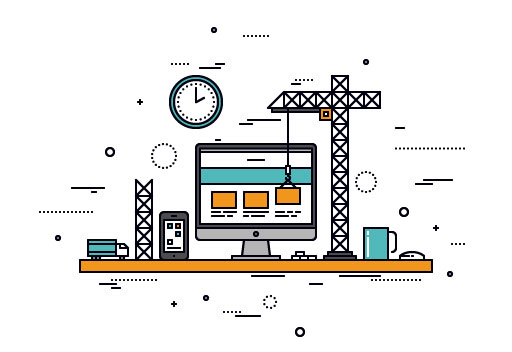
Building Environments Around Your Products and Services
What your audience sees once you have directed them to your products and services pages is often overlooked. Having comprehensive environments built around your offerings can be the key to turning potential into revenue.
There are many important facets to a marketing campaign, none more so than how you capture and ultimately convert a lead. Devising a great strategy, creating the right content to engage your audience, and how you execute make up the key components of a successful project. But what is often overlooked is what your audience sees once you have directed them to your products and services pages on your website.
You have executed a social media and direct email campaign. You are seeing impressive engagement stats, but nobody has provided their details. It is crucial that you have enough content and the mechanisms in place to convert them into either a sale, a warm lead for your sales team to follow up on, or a new contact to add to your nurturing stream.
When a potential or existing customer looks at the information around your products and services, and you do not have enough supporting content and a call-to-action button, you risk losing the opportunity you have created.
How you turn interest into a sale is paramount. Having comprehensive environments built around your products and services can be the key to turning potential into revenue.
As you know, many businesses operate almost exclusively on the face-to-face model of account managers and sales representatives. This will always be a successful and important method of doing business, but this does not mean you cannot seamlessly merge the old with the new to generate significant revenues through your website and your digital campaigns at the same time.
When you consider the process of buying a product, not having enough content to support it — such as case studies, white papers, and how-to videos — makes it very difficult for customers to decide. Data sheets and spec sheets are simply not enough.
SEO, social media, and direct email are all tools for generating demand. Whilst generating traffic is vital, it will not result in an increase in leads and revenue if the environments around your products and services are not effectively laid out, populated with insightful and informative supporting content, and fitted with strategically placed call-to-action buttons.
In summary, when you couple this with product-specific content like success stories and how-to videos, you create an environment around the product or service that is conducive to converting traffic into revenue, which is one of the necessary foundations needed to execute a successful marketing campaign with demand generation at its core.
2026
Article

Why It Is Crucial to Have a Robust Demand Generation Strategy
Demand generation needs to be at the core of everything you do. Simply put, it is the process of how you capture interest, where that lead goes, and how you convert or nurture that lead moving forward.
When it comes to digital marketing, demand generation always needs to be at the core of everything that you do. When you begin the process of developing a campaign, you will generally come up with a strategy that will need to include a few crucial elements, such as defining your audience, the messaging and the content you build around that, and how you plan to execute the overall project. But when you look at what you want to achieve, your demand generation strategy needs to be at the heart of the discussion.
Simply put, demand generation is the process of how you capture interest — a lead — where that lead goes, and how you convert or nurture that lead moving forward.
Before we get to how you capture a lead, it is important to explore the importance of having a foundation in place. There are several ways in which companies manage their leads: some use a CRM, others a spreadsheet. Either way, it is crucial that you have a mechanism in place to convert that into revenue. If they are not ready to commit immediately, it is vital that you have a way of nurturing them to the point that they are.
Putting in the hard work of getting the potential customer to your website, and not being able to convert them because the environments around your products and services are not demand generation friendly, is a problem.
How you capture a lead can be done in several ways. However, two approaches can be done simultaneously: through premium content, and through your website. Not enough can be said about the importance of creating content that your audience can relate to.
When you are creating content at this level, your audience are happy to fill out a form to read and download your white paper. This puts you in a great position to not only capitalise and increase revenues, but to start building a detailed profile on your audience through the fields you include on your data capture forms.
In summary, when you have all the bases covered in terms of your demand generation process, you can then turn your focus to execution. Choosing the correct media platforms becomes easier, and sending emails becomes far more effective. Achieving and surpassing your marketing objectives can only be reached when you have a robust foundation in place.
2026
Article

Shaping Your Message Around Insight Rather Than the Solution
Content needs to be relevant and provide insight. When you take a broader approach and focus your messaging around the challenges or applications rather than the products themselves, you create more relatable and effective content.
We all know that developing content, whether it is to support your products or for a demand generation campaign, is crucial. There is no better way to engage with your audience than through content. However, content needs to be relevant, it needs to provide insight, and ideally, depending on the type of content, best served without any direct selling.
The amount of content we receive and that is made available on a daily basis for our consumption is quite staggering. Unfortunately, the vast majority of that content is usually PR-related, news, or a write-up on how great a product or service is. Whilst that product may be great, it is not good reading and does not provide any insight into what application or challenge it solves, nor does it add any value to what the product offers.
The content that you create needs to relate to the audience consuming it. This means creating a real-life scenario, one which an engineer, for instance, would be faced with on a regular basis, and providing insight into that scenario — whether a challenge or not — and engaging with them on that level.
When your audience reads this, they will immediately be able to relate and will not only be intrigued and read on, but will be interested to find out what the solution is. When you create content like this, you put yourself in a position to increase revenue and achieve a much better return on investment.
When you take a broader approach and focus your messaging around what the products or services solve — in other words, the challenges or applications, instead of the products themselves — not only does it provide interesting reading and great content for generating demand and interest, it is something your audience can relate to, and ultimately help them decide if the solution is the right fit for their application.
In summary, premium content with demand generation at its core is crucial. Without premium content, your demand generation strategy cannot be optimised. You want your content to be of such a high quality that people are willing to fill out their details and be contacted in order to read it.
2026
Article

Why Social Media Should Be Part of the Strategy, Not the Strategy
Social media, like placing an advert in a publication or sending an email blast, falls under the execution phase of a campaign. Having a solid foundation in place before launching a social media project is essential.
Whilst the title may or may not suggest that social media campaigns cannot be run as the main objective, this simply is not the case. The importance of having a solid foundation in place before you think about running a social media campaign cannot be overstated.
Social media, like placing an advert in a publication or sending out an email blast, falls under the execution phase of a campaign. Having a solid structure in place to effectively execute your demand generation campaigns — in terms of capturing leads and making sure your content is insightful and relatable to your audience — are some of the fundamentals that need to be in place before you launch a social media project.
Depending on the platforms you choose to promote your business and products through, there is a plethora of content from many different companies and individuals. The content you create and post needs to be of a high quality. If you are one of those businesses that have a good grasp on your audience and what they want in terms of content, then you are off to a good start and have a much better opportunity to maximise your results through social media.
Beginning with optimising your product and service environments can be a huge benefit, as it will always yield effective content to push through social media.
Choosing what platforms to use can be challenging, but at the same time crucial. When you have a good grasp on your audience, it makes this process far simpler. Many companies who do not have content will opt for a Google AdWords campaign, or Google Shopping if they have multiple products. This is a natural approach, but there is no easy way to generate results, and if your campaigns are going well, without a demand generation system in place, the leads are not being captured and acted upon.
In summary, there are many elements that need to be considered before you execute your next social media campaign. From choosing the correct platform to developing the right content and having a robust demand generation structure in place — having a solid foundation set up will help you to not only save money, but increase revenues and improve your return on investment.